
Residential Electrician in Bundaberg: 10 Essential Tips for Hiring the Right Electrician

Introduction: Electricity Is Not the Place to Wing It
There's a very specific kind of overconfidence that strikes homeowners when they're standing in front of a problem they can't immediately see the solution to. The flickering light. The tripping circuit breaker. The power point that stopped working sometime last Tuesday for no apparent reason. And somewhere in the back of the mind, the thought creeps in — "How hard can it be?" The answer, when it comes to home electrical services, is: complicated, invisible, and genuinely dangerous if you get it wrong.
Bundaberg is a proud, practical town where people don't shy away from sorting things out themselves — and that's a good quality. But electrical work sits in a different category from most home maintenance tasks. It's regulated, licensed, and for very good reason: electrical faults are one of the leading causes of house fires in Australia. Choosing the right residential electrician in Bundaberg isn't just about getting the job done — it's about getting it done safely, legally, and in a way that protects your home, your family, and your investment for years to come.
That's what this guide is here for. Tag Team Electrical has been working with Bundaberg homeowners across the full range of home electrical services, and we've distilled everything you need to know about finding the right electrician into ten practical, honest tips. Let's get into it.
Tip 1: Always Start With Licensing — It's Non-Negotiable
If there's one thing that genuinely cannot be compromised when hiring a residential electrician in Bundaberg, it's licensing. In Queensland, all electrical work must be performed by a licensed electrical contractor or a licensed electrician working under one. This isn't a technicality — it's a safety and legal requirement that exists because unlicensed electrical work carries serious risks, including fire, electrocution, and insurance voidance.
Before engaging any electrician for home electrical services, ask to see their licence. A genuine licensed electrician will provide this without hesitation — it's part of how professional tradespeople operate, and it's something any reputable electrical contractor is proud to show. In Queensland, electrical contractor licences and electrician licences can be verified through the relevant state authority, so if you want to double-check, you absolutely can. Red flag: if an electrician hedges, makes excuses, or claims they "don't need one for this kind of job," end the conversation and find someone else.
Tag Team Electrical holds all required Queensland licensing, and the team is always happy to provide documentation upfront. It's one of those things that should be standard — and with us, it is.
Tip 2: Confirm They Carry Adequate Insurance
Licensing and insurance are the two pillars of hiring any trade professional, and they're especially critical when hiring a residential electrician. Public liability insurance protects you as the homeowner if something goes wrong during the job — accidental damage to your property, injury on site, or complications arising from the work. Without it, any costs from such incidents could potentially land with you rather than the contractor.
Workers' compensation insurance is equally important. If an electrician is injured while working in your home and doesn't have workers' comp coverage, the legal and financial ramifications can be significant. A professional electrical contractor running a legitimate operation carries both policies as a matter of course, and providing proof of coverage when asked should be entirely routine. If an electrician can't or won't confirm their insurance status, that's a meaningful signal about how professionally the rest of the job is likely to be handled.
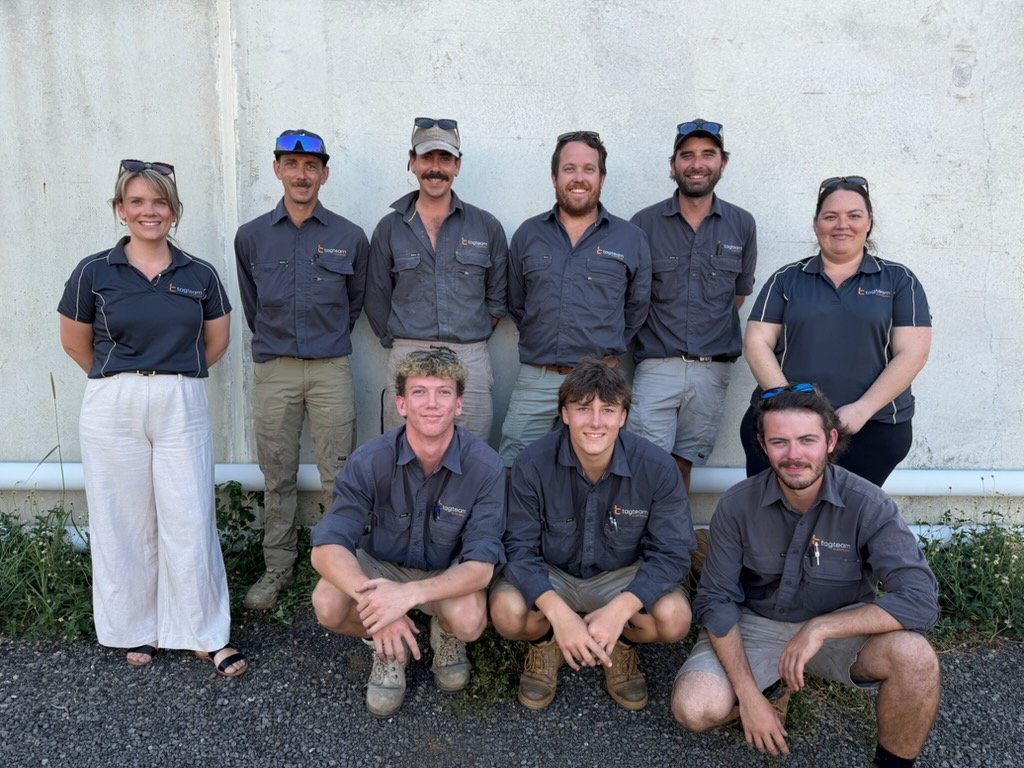
Tag Team Electrical team arriving at a Bundaberg residential property for a home electrical services job
Tip 3: Look for Local Experience in Bundaberg
There's a meaningful difference between an electrician who works across a wide geographic area and one who works regularly in Bundaberg specifically. Local experience matters in ways that aren't always obvious from the outside. Bundaberg's housing stock includes a significant number of older homes that were built in an era of different wiring standards, materials, and practices — homes where you're likely to encounter older wiring types, under-specified switchboards, and electrical systems that have been added to over the decades without always being upgraded consistently.
An experienced residential electrician who works regularly in Bundaberg understands these local nuances. They know which older wiring configurations are common, which types of house rewiring situations come up frequently, and what kinds of electrical installations or upgrades local council and network regulations require. They also understand the local climate's impact on electrical infrastructure — Bundaberg's humidity, heat, and exposure to severe weather events means that surge protection, weatherproofing, and storm-related electrical repairs come up regularly, and local experience with these specifics is genuinely valuable.
Tag Team Electrical is a Bundaberg-based team with deep roots in the local area. When we arrive at a job, we're not starting from scratch on understanding the context — we know the territory, and that makes every job more efficient and more accurate.
Tip 4: Check Their Range of Services
Not all residential electricians offer the same scope of work, and it's worth confirming upfront that your chosen electrician can handle everything your home might need — now and in the future. Some electricians specialise in new construction installations, others focus heavily on fault-finding and electrical repairs, and others have expertise across the full residential spectrum. For most homeowners, the most valuable relationship is with a residential electrician who can handle a wide range of home electrical services so you're not calling three different contractors for different jobs.
The full scope of services a comprehensive residential electrician should offer includes electrical repairs for faults and failures, electrical installations for new appliances and infrastructure, switchboard upgrades to handle modern electrical loads, smoke alarm installation and compliance, LED lighting installation, ceiling fan installation, power point installation and relocation, safety switch installation, circuit breaker repairs, surge protection systems, and emergency electrician response for urgent situations. If the electrician you're considering only handles a narrow band of these, that's worth knowing before you commit.
Tag Team Electrical covers the full range of residential electrical work in Bundaberg. From a single power point installation through to a complete house rewiring project, the team has the expertise and equipment to handle it all under one roof — which is both convenient and consistent when it comes to the quality of the work across every job.
Tip 5: Ask About Electrical Safety Inspections
Here's a tip that too many Bundaberg homeowners don't know to ask about: a comprehensive electrical safety inspection is one of the most valuable things a residential electrician can do for you, particularly if you've recently purchased a property, haven't had any electrical work done in more than a decade, or are planning significant renovations.
An electrical safety inspection involves a licensed electrician methodically assessing your home's complete electrical system — the switchboard, wiring, earthing, safety switches, smoke alarms, outlets, and fixed appliances — to identify anything that's non-compliant, deteriorating, or potentially dangerous. In older Bundaberg homes especially, these inspections regularly uncover issues that the homeowner had no idea existed: wiring that's reached end of life, safety switches that aren't present or aren't functioning correctly, overloaded circuits, or electrical installations that were done without proper compliance at some point in the past.
The investment in an electrical safety inspection is modest compared to the peace of mind it provides — and dramatically modest compared to the cost of dealing with a house fire or a major electrical failure that could have been identified and addressed proactively. Tag Team Electrical conducts thorough residential electrical safety inspections and provides clients with a clear, honest report on the condition of their system and any recommended actions.
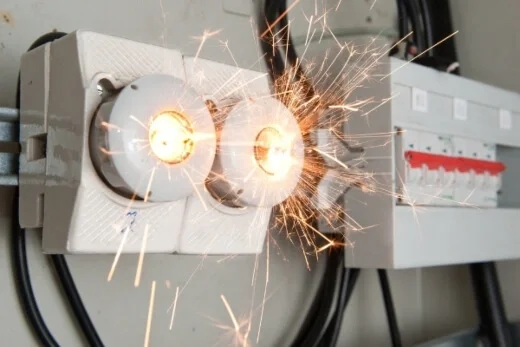
modern safety switch and circuit breaker switchboard installed in a Bundaberg home
Tip 6: Don't Skip the Switchboard Conversation
If your Bundaberg home is more than twenty years old, the switchboard conversation is one worth having proactively rather than reactively. Older switchboards — the type with ceramic fuses rather than modern circuit breakers and safety switches — were designed for a very different era of electrical consumption. Homes in the 1970s, 80s, and even 90s didn't have the same number of high-draw appliances, air conditioning loads, EV chargers, or home office equipment that a modern household runs simultaneously.
A switchboard upgrade replaces the old fuse board with a modern unit fitted with circuit breakers and safety switches (also called residual current devices, or RCDs). Circuit breakers respond faster and more precisely to overloads than ceramic fuses, and they're resettable — no need to find and replace a blown fuse at 11pm. Safety switches, meanwhile, are specifically designed to detect current leakage that could cause electrocution and cut the power within milliseconds — a capability that old-style fuses simply don't have. In Queensland, safety switches are mandatory on certain circuits in residential properties, and a switchboard upgrade brings your home into compliance as well as dramatically improving its safety profile.
Tip 7: Understand Queensland's Electrical Regulations
Australia's electrical regulations vary by state, and Queensland has its own specific requirements that govern what work needs to be done by licensed electricians, what work requires compliance certificates, and what standards apply to different types of electrical installations. Understanding the basic regulatory framework helps you have more informed conversations with electricians and helps you spot when something isn't being done the way it should be.
In Queensland, all electrical work that involves connecting to, altering, or adding to the fixed wiring of a home must be carried out by a licensed electrician and must be completed to the relevant Australian Standards. Significant electrical work requires an Electrical Safety Certificate of Test (commonly called a compliance certificate), which documents that the work has been tested and complies with applicable standards. If an electrician completes a significant job and doesn't provide a compliance certificate, that's a red flag. The certificate isn't just paperwork — it's your record that the work was done properly and is compliant.
For a comprehensive overview of Queensland's electrical licensing requirements and consumer rights when engaging electrical contractors, the Electrical Safety Office Queensland provides authoritative information on regulations, licensing, and what to expect from licensed electrical work. It's a genuinely useful resource if you want to understand your rights and obligations as a homeowner engaging in electrical services.
Tip 8: Ask Specifically About Emergency Electrician Availability
Electrical problems have a frustrating tendency to occur at inconvenient times. A tripped safety switch at 7am on a cold winter morning, a complete power failure on a Sunday evening, a hot water system that's stopped working before a Monday morning shower — these are the moments when emergency electrician availability matters enormously. Before you commit to a residential electrician for any ongoing relationship, it's worth asking what their emergency response capability looks like.
Some electrical contractors in Bundaberg offer genuine around-the-clock emergency electrician services; others operate standard business hours only and refer emergency calls elsewhere. Knowing this in advance means you won't be scrambling to find an emergency electrician when something urgent happens, because you'll already have a trusted number in your contacts. Tag Team Electrical provides emergency electrical services to Bundaberg households because we understand that electrical problems don't keep business hours, and leaving a family without power or dealing with a live fault overnight isn't an acceptable outcome.
Tip 9: Smoke Alarm Compliance Is Not Optional
Queensland has some of Australia's most stringent smoke alarm legislation, and it's worth making sure your residential electrician is across the requirements and can help you achieve compliance. Since January 2022, Queensland has required interconnected photoelectric smoke alarms in specific locations in residential properties, with requirements that vary depending on whether the property is being sold, leased, or simply occupied by the owner. The rollout of full compliance requirements continues progressively, and staying on top of where your property stands is genuinely important.
Smoke alarm installation done by a qualified residential electrician ensures that the alarms are correctly placed, properly interconnected (so that when one alarm sounds, all alarms sound throughout the home), correctly hardwired where required, and compliant with the Queensland legislation. This is not a job for cheap battery-operated standalone alarms stuck to the ceiling with double-sided tape — the legislation specifies requirements that go well beyond that, and non-compliance carries real consequences for property owners, particularly those with rental properties. Tag Team Electrical handles smoke alarm installation and compliance assessment for Bundaberg homeowners and landlords, and can advise on exactly what your property needs to meet current Queensland requirements.
Tip 10: Value Honest Communication Over the Cheapest Quote
The final tip is perhaps the most important, and it's the one that's hardest to quantify. A residential electrician who communicates honestly — who explains what they're finding, why they're recommending what they're recommending, what the options are, and what the consequences of different choices are — is worth considerably more than one who gives you a rock-bottom number and tells you what you want to hear.
Electrical work involves a lot of things that are invisible once completed. You can't see behind your walls, inside your switchboard's wiring, or through the ceiling space where cables run. This invisibility means trust matters enormously — you need to be confident that the person doing the work is doing it properly, with the right materials, to the right standards, and without cutting corners that you'd never be able to detect. Honest, clear communication during the quoting and job process is one of the best signals that you're working with an electrician who operates with integrity.
The table below summarises the ten essential tips as a quick reference before you make your hiring decision:
| Tip | What to Check |
|---|---|
| 1. Licensing | Confirm valid Queensland electrical licence |
| 2. Insurance | Public liability + workers' compensation confirmed |
| 3. Local experience | Regular work in Bundaberg specifically |
| 4. Service range | Full residential electrical services coverage |
| 5. Safety inspections | Offers comprehensive home electrical assessments |
| 6. Switchboard capability | Can handle upgrades and compliance |
| 7. Regulatory knowledge | Understands Queensland electrical standards |
| 8. Emergency availability | Offers after-hours emergency electrician service |
| 9. Smoke alarm compliance | Up to date with Queensland smoke alarm legislation |
| 10. Communication | Transparent, honest, and clear throughout |
Conclusion
Hiring the right residential electrician in Bundaberg comes down to ten clear, practical principles: confirming licensing and insurance, prioritising local experience, understanding the full scope of home electrical services on offer, asking about safety inspections and switchboard capability, knowing your rights under Queensland electrical regulations, confirming emergency availability, ensuring smoke alarm compliance, and valuing honest communication above all else. These aren't complicated criteria, but they're the difference between a stress-free electrical experience and one that leaves you with more problems than you started with. Electrical work done well is invisible — you don't notice it because nothing goes wrong, everything works, and your home is safer for it. That's the standard Tag Team Electrical holds every job to across Bundaberg.
If you're ready to work with a residential electrician in Bundaberg who takes every one of these principles seriously, Tag Team Electrical is ready for your call. Whether you need a single power point installation, a full switchboard upgrade, emergency electrician response, or a comprehensive electrical safety inspection, our licensed team delivers quality work, transparent communication, and the peace of mind that your home's electrical system is in the right hands. Contact Tag Team Electrical today and let's get it done properly.
FAQs - About Hiring a Residential Electrician in Bundaberg
1. Do I really need a licensed electrician for small electrical jobs in my Bundaberg home?
Yes — in Queensland, virtually all work involving your home's fixed wiring must be done by a licensed electrician. This includes replacing power points, installing ceiling fans, and swapping light fittings. Even small jobs carry real risks if done incorrectly, and Tag Team Electrical handles them all.
2. How do I know if my home's electrical system needs an upgrade?
Watch for circuit breakers tripping frequently, flickering lights, warm or scorched power points, or a switchboard still running ceramic fuses. Homes over twenty to thirty years old without recent electrical maintenance are also worth getting checked. An electrical safety inspection is the clearest way to know where you stand.
3. What's the difference between a circuit breaker and a safety switch?
A circuit breaker protects your wiring from overloading. A safety switch (RCD) protects people — it detects current leakage that could cause electrocution and cuts the power within milliseconds. Both should be present in any modern compliant switchboard, and adding safety switches where they're missing is one of the smartest upgrades a homeowner can make.
4. How often should I have an electrical safety inspection done?
Every five to ten years for a well-maintained home — more often for older properties, post-renovation, or after severe weather. Given Bundaberg's history with storms and flooding, a post-event electrical check is always a smart call. Tag Team Electrical recommends one any time you're unsure about your system's history or condition.
5. What should I do in a home electrical emergency before the electrician arrives?
Turn off the main switch at your switchboard if it's safe to do so, and keep everyone away from the affected area. Don't attempt any investigation yourself. If there's fire, flooding near electrical equipment, or someone has received a shock, call 000 first — then call Tag Team Electrical's emergency line.